Frame
Build the context
Define the question, forces, conditions, and constraints. Add supported feeds and scenario-assistant proposals.
AnyWorldSim / Decision superiority platform
Author forces, missions, and conditions, then compare how each plan performs.
Use shared scenarios for defence planning, team exercises, and repeatable analysis. Review outcomes with the assumptions and models that produced them.
Author · Run · Compare · Review
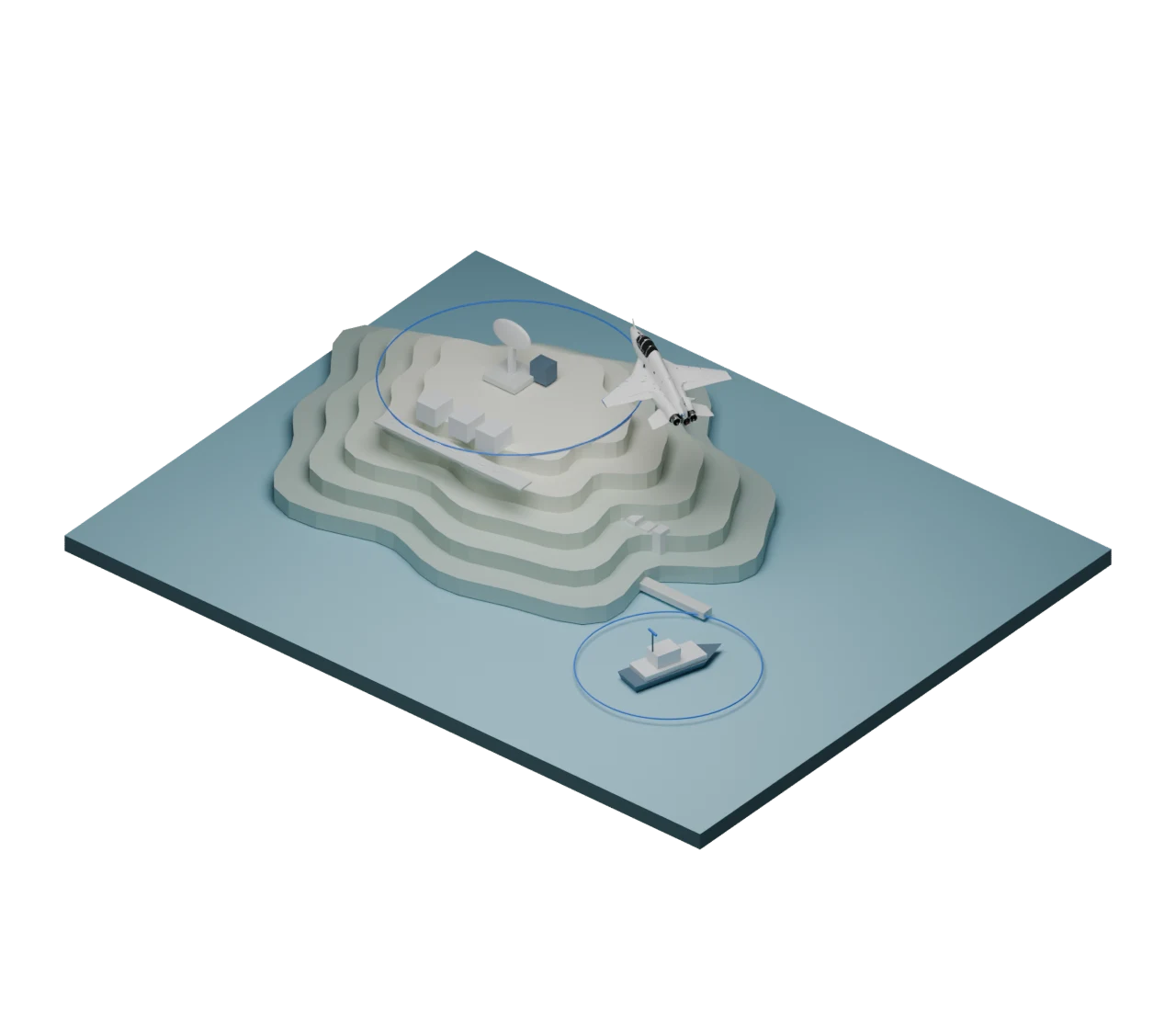
Air, sea, and land in the same scenario.
The decision cycle
Keep the scenario and its assumptions with each planning, exercise, and assessment step.
Frame
Define the question, forces, conditions, and constraints. Add supported feeds and scenario-assistant proposals.
Explore
Vary plans, adversary behaviour, logistics, and weather across reproducible runs.
Rehearse
Bring staff, AI-enabled forces, command roles, and approval rules into controlled play.
Learn
Review outcomes and decision records. Refine the plan, doctrine, or policy for the next cycle.
Inside AnyWorldSim
See demonstration views of scenario preparation, opposed-force exercises, policy development, and capability modelling.
Scenario authoring
Edit forces, missions, zones, weather, and timed events in the Scenario Editor. Save the assumptions with the scenario.
View full-size screenshot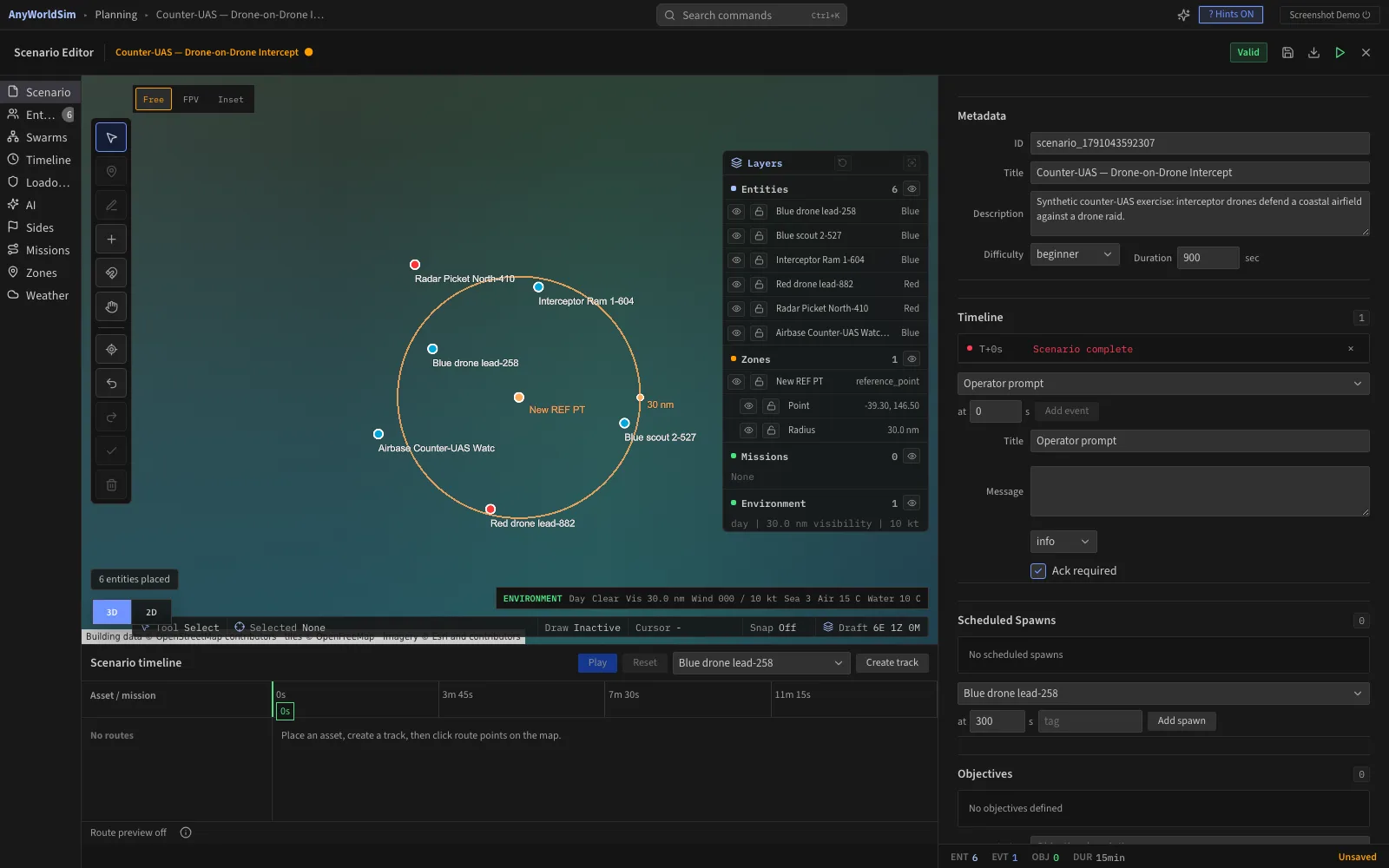
Decision capabilities
Compare force posture, simulated behaviour, engagement decisions, and resource constraints across runs.
View force locations, terrain, weather, logistics, and supported radar, air, and maritime tracks in the scenario.
Compare plan variants, resource constraints, and environmental conditions. Examine how outcomes change as assumptions change.
Assign doctrine, mission agents, or learned policies to red, blue, and neutral forces, including coordinated UAS groups.
Connect contact classification, prioritisation, asset assignment, rules of engagement, and approval workflows inside the simulation.
Use seeded repeat runs, parameter sweeps, and plan-variant comparison in Planning, including counter-swarm raid-size studies. Train and evaluate policies in Doctrine.
Inspect decision records, event timelines, replay, and after-action reports to revise the scenario or plan.
Operational studies
See the variables and outputs for counter-UAS, maritime security, force-readiness, and civil resilience studies.
Air defence · UAS · Electronic warfare
Compare layered defence against individual drones and coordinated swarm raids under changing sensing and navigation conditions.
View the relevant editionIllustrative study scope · results depend on selected models
Integration into your workflow
Agree the data feeds and model adapters for the study, then review plan comparisons, replay, and assessment outputs in your planning process.
Review integrationProduct family
Planning, Wargaming, and Doctrine share the portable .awsim scenario and its provenance.
Author the scenario, define alternatives, and inspect runs and outcomes.
Explore the platform →Exercise decisions with teams, command roles, AI-enabled forces, and after-action review.
Explore team exercises →Codify doctrine, train and evaluate policies, and manage model versions pinned to scenario revisions.
Explore doctrine →Workstation and shared-server deployments. Editions define seats, capacity, integrations, and support.
Compare editions →Evaluation
Define the scenario, plan variants, and assessment criteria for your evaluation.